
"Costa Rica coffee profile"
300 article(s) found

A brief introduction to the manor in Guanacaster, Costa Rica, do coffee beans have any outstanding flavor?
Professional coffee knowledge exchange more coffee bean information please follow the coffee workshop (Wechat official account cafe_style) Costa Rica Guanacaster coffee taste Costa Rican coffee is usually very pure and sweet, but mellow thickness tends to be elegant. In recent years, many processing plants have begun to produce coffee with a variety of tastes and styles. Coffee has been grown in Costa Rica since the early 19th century.

Suggestions on the characteristics, flavor and taste of the top coffee brand of St. Roman, Tarazu, Costa Rica
Professional coffee knowledge exchange more coffee bean information please follow the coffee workshop (Wechat official account cafe_style) hand-washed Tarazu San Roman, Costa Rica. 15g powder, medium grinding (small Fuji ghost tooth cutter 4 grinding), v60 filter cup, 88-89 degrees water temperature, the first injection of 30g water, 27 seconds of steaming, injection to 105g water cut off, wait for the powder bed water to half again

The latest introduction of boutique coffee beans Costa Rican coffee
Costa Rican coffee is produced in the Republic of Costa Rica (The Republic of Coffee) in the south of Central America. Its quality is similar to that of Colombian coffee and is suitable for blending mixed coffee. Costa Rican coffee has full particles, ideal acidity and unique strong flavor. High-quality Costa Rican coffee is called extra hard beans, and this kind of coffee can grow at an altitude of more than 1500 meters.

The Central Valley of Costa Rica introduces the history of coffee cultivation in Sonora, a long manor.
Country: Costa Rica: central Valley Manor: Sonora Manor processing: sun flavor: black cherry, hazelnut, toffee, berries, nectarine Central Valley, or Valle Central in Spain, is a plateau in central Costa Rica. The land in the valley is a relative plain surrounded by several mountains and volcanoes of the Central Mountains. The area has Goth.

Flavor characteristics of Costa Rican coffee beans Cerro St. Louis Micro-processing Plant Micro-La Saaki Coffee
The Delgado brothers-Magali and Alexander- operate the Cerro San Luis microprocessing plant in the province of Alajuela in the western valley of Costa Rica. They are with their families and are third-generation coffee growers. Their miniature factory processes cherries from two farms, Finca La Amada and Finca el Venado. There, the fertile volcanic soil of the West Valley produced

Suggestion on hand-washing parameters of High-quality Coffee beans washed by St. Roman in Tarazu, Costa Rica
For the exchange of professional baristas, please follow the coffee shop (Wechat official account cafe_style) hand-made in San Roman, Costa Rica. 15g powder, medium grinding (small Fuji ghost tooth cutter 4 grinding), v60 filter cup, 88-89 degrees water temperature, the first water injection 30g water, 27 seconds of steaming, injection to 105g water cut off, wait for the powder bed water to half and then water injection, slow water injection until 225g water

Brief introduction of Costa Rican Coffee Bean grading system recommendation of flavor characteristics of Costa Rican Mozart coffee beans
Professional coffee knowledge exchange more coffee bean information please follow the coffee workshop (Wechat official account cafe_style) front street-Costa Rican classification, chocolate flavor introduction Costa Rican coffee has always been regarded as the perfect type of classic flavor, balanced, clean, mild is its tone, has always been extremely flavor

Stories and allusions of Costa Rican Tarazu Saint Roman washing boutique coffee beans
Communication of professional baristas Please pay attention to Coffee Workshop (Wechat official account cafe_style) Costa Rica is the country where coffee was first introduced to Central America for cultivation, with a long history and a complete coffee organization from production to marketing system. Because it is located in the Central American Gorge, which is full of volcanoes and has the natural advantages of sunshine and land, it is tempered by Pacific and Atlantic currents and sea breezes at the same time.

Sour, sweet and mellow Guatemala Antigua Coffee Bean Flavor description method
Of the three major non-volcanic coffee producing areas in Guatemala, the Mini Tenango Highlands has the driest climate and the highest elevation. The dry and hot wind from Mexico's Tehuantepec plateau protects the region's coffee from frost and can be grown to 2000 meters (6500 feet). Because of its remote location, all coffee farmers have to process their own coffee, but fortunately it is a stream in the area.

Delicious and balanced Inchter Estate Fine coffee beans Growing conditions Location Climate Altitude Profile
The first estates to visit in Guatemala are San Marco, Las Rosas de Oakland estates. On the way, I saw the sea that had no chance with the coffee farm. Coming to Guatemala feels like the country has a unique flavor. An indescribable taste of country. Beautiful coffee flowers! It smells like jasmine. As we approach Oakland Manor, the rest of the way is free.

Nutritional balance of Inchter estate fine coffee beans cultivation geographical location climate altitude profile
As we approach Oakland Manor, taxis are no longer available for the rest of the way. The truck that came up to meet them continued to move toward the manor in the mountains, and the bad road conditions made the car sway almost to the point of muscle pain. But it's really hard. While rocking with the car while enjoying the natural scenery of the mountains. Guatemala? San Marco
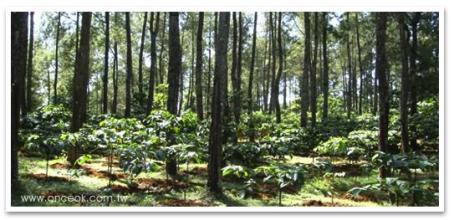
Iron pickup or bourbon in Tarazhu, Costa Rica? Iron pickup coffee beans
Iron pickup "Typica" iron pickup, the name sounds majestic and powerful, but in fact it is not so strong. It has a weak physique, poor disease resistance, easy to catch rust leaf disease, and produces less fruit. It is one of the oldest native varieties in Ethiopia, and many Arabica are derived from iron pickups! The parietal leaf of the iron pickup is bronzed, and the bean grain is large, pointed, oval or thin.

Brief introduction of Tarasu Fire Phoenix Manor, a Coffee Tree species in Costa Rica
In this coffee producing place, coffee of all grades and types accounts for 1/3 of the global consumption. Costa Rica, which has a share in the global coffee market, grows coffee trees grown in Arabica. Through improvement, the quality of coffee beans is better and more stable; in order to facilitate picking, coffee trees are maintained at a height of about 2 meters by continuous pruning; the coffee people eat is fruit.

Costa Rican Saint Roman Coffee Bean characteristics and Flavor description planting area
For the exchange of professional baristas, please follow the coffee workshop (Wechat official account cafe_style). The best coffee in Costa Rica seems to come from small processing plants, throughout several major coffee producing areas, including Tarazu and the Western Valley. This so-called coffee revolution originated 15 years ago and has greatly changed the way bean baking experts and importers think about Costa Rican coffee. Centering on the processing plant

Brief introduction of Costa Rican Coffee Tarazhu Coffee from excellent producing area of Costa Rica
The coffee beans produced at the high latitudes of Costa Rica are famous in the world, full-bodied, mild in taste, but extremely sour. The coffee beans here have been carefully processed, which is why they have high quality coffee. Located in the south of SanJos, the capital of Tarasu, Costa Rica is one of the most valued coffee growers in the country. Tarasu in Costa Rica (

Brief introduction, varieties and characteristics of Costa Rican Coffee
Quality editor S.H.B. It is a very hard bean with an altitude of more than 1500 meters above sea level, which means high quality Costa Rican coffee. This extra-hard coffee bean suitable for medium and heavy roasting has a strong sour taste and charming aroma. Costa Rican SHG coffee is usually full-grained, the flavor is clear, the acidity is bright, and the consistency is ideal. The strong flavor makes the tail rhyme go back to the throat for a long time.

A brief introduction to the characteristics of Costa Rican Coffee Flavor Wheel
A brief introduction to the characteristics of Costa Rican Coffee Flavor Wheel, with reference to the altitude of the producing area, according to the density of beans: SHB,strictly hard bean, very hard beans 3900 feet (about 1200m) GHB,good hard bean, hard beans 3300 feet (about 1000m) MHB,medium hard bean, medium beans 1600 feet (about 500m) usually, sea

Panamanian Coffee characteristic Flavor Taste Manor production area introduction to Esmedala Manor
Pokuit has always been the most high-profile coffee producing area in Panama. There are many famous estates in the region, such as Esmeralda, which is famous for Geisha varieties, Hartman, Mama Cata, Kotowa, Santa Teresa, etc., while Ai

Costa Rican Coffee Taste introduction to Costa Rican Black Soul Flavor
Professional coffee knowledge exchange more coffee bean information please follow the coffee workshop (Wechat official account cafe_style) front street coffee introduction-Costa Rica coffee flavor Costa Rica is the first country where coffee was introduced to Central America, with a long history, coffee organization from production to marketing system is complete. Because it is located in the Central American Gap, the territory is full of volcanoes and has the nature of sunshine and land.

Brief History of Panamanian Rosa Coffee
In 931, it was exported to Kenya in obscurity from Geisha Mountain Mountain in southwestern Ethiopia (coincidentally synonymous with Japanese geisha), wandered to Tanzania and Costa Rica, was transplanted to Panama in the 1960s, and then went through nearly half a century before it became a blockbuster, defeating the victorious armies such as Bourbon, Kaddura, Kaduai, Tibica and so on, winning 2005 and 2 in one breath.